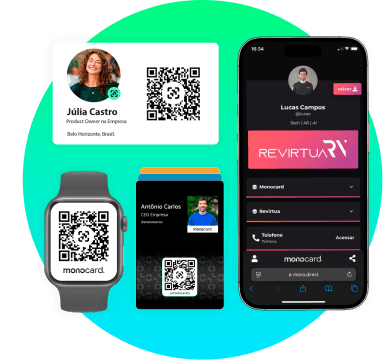
In today's hyperconnected world, lead generation is the heart of any business's growth strategy. With increasingly demanding consumers and competitive markets, finding and nurturing potential customers has become a strategic challenge. Fortunately, the right tools can turn this challenge into an opportunity.
In this definitive guide, we will explore the main lead generation tools that can help take your business to the next level, including how Monocard revolutionizes this process with its digital business cards and business intelligence.
What are lead generation tools?
Lead generation tools are platforms, software, or technologies developed to attract, capture, and organize information from potential customers interested in a company's products or services. They play a strategic role in marketing and sales, helping to turn contacts into real business opportunities.
These tools can cover different stages of the sales funnel:
- Attraction: Generate traffic through SEO, paid campaigns, or strategic content.
- Capture: Collect contact information through forms, pop-ups, or digital interactions.
- Qualification: Identify the leads most prepared for the next step by analyzing behavior, interests, and profile.
- Nurturing: Engage leads with content and interactions until they are ready for conversion.
Why use lead generation tools?
Investing in lead generation tools is essential for any company looking to grow sustainably and efficiently. Here are some main reasons to incorporate them into your strategy:
- Automation and efficiency: Tools eliminate manual and repetitive tasks, allowing your team to focus on more strategic activities, such as sales and personalized service.
- Improvement in lead qualification: With technologies like lead scoring and behavior analysis, it's possible to identify which contacts have the highest conversion potential, optimizing resource use.
- Expansion of reach: Platforms like LinkedIn Sales Navigator and Ahrefs help reach new audiences and increase brand visibility in relevant channels.
- Personalization and engagement: Tools like ActiveCampaign and HubSpot allow for creating personalized communications, increasing the chance of conversion.
- Data for strategic decisions: Reports and metrics generated by tools like Salesforce and Monocard offer valuable insights, allowing continuous adjustments in marketing and sales strategy.
With the right tools, your company not only attracts more leads but also builds solid and lasting relationships, increasing conversion and loyalty rates.
16 Main Tools for Lead Capture
1. Monocard: Smart networking with digital business cards
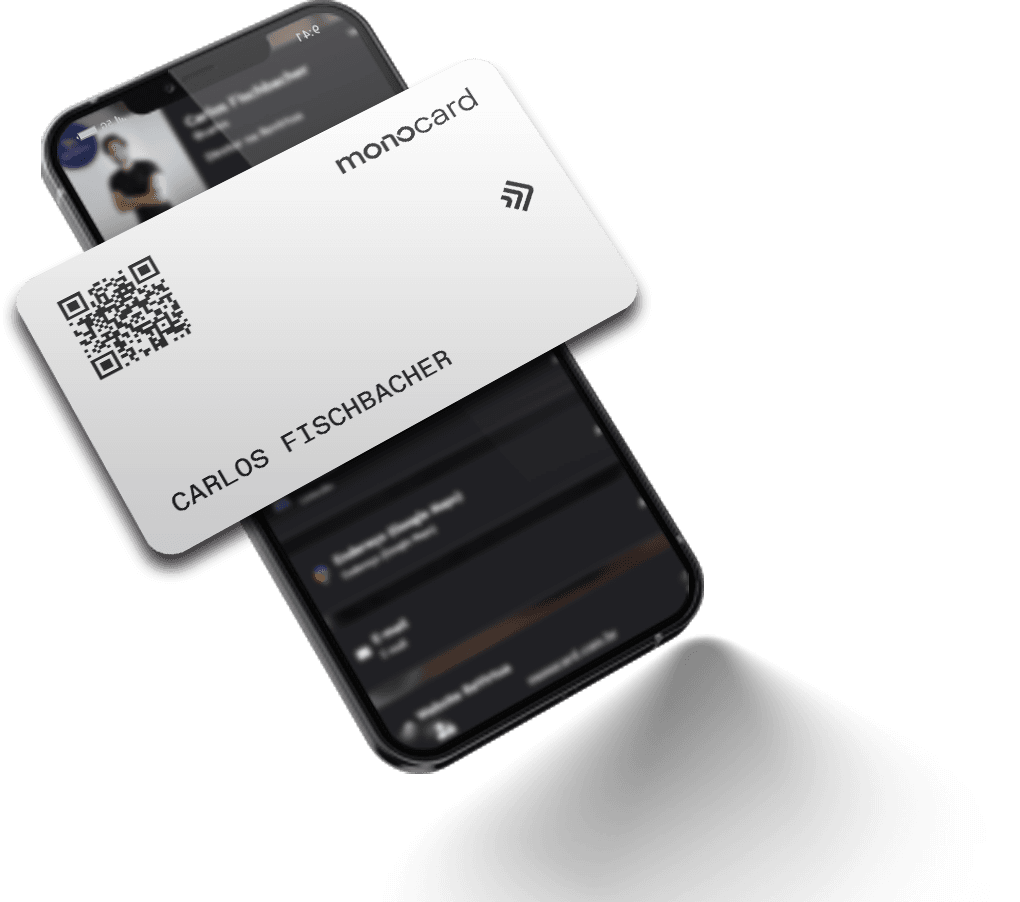
Monocard is more than a digital business card; it's a complete solution for lead capture. When you share your personalized digital profile, contact data is automatically stored in the system, allowing for immediate follow-up. Additionally, detailed reports show how leads interact with your profile.
Easy to share, Monocard's digital business cards work with NFC technology and QR Code, ideal for external teams, fairs, and in-person events.
💡 Differential: Integration with CRM systems facilitates the flow of information, eliminating manual steps and optimizing prospecting.
2. OptinMonster: Convert visitors into qualified leads

OptinMonster is a leading tool in creating interactive forms and pop-ups for websites. It offers customization based on user behavior, allowing you to create messages tailored to different funnel stages.
💡 Main features:
- A/B testing to optimize campaigns.
- Advanced segmentation for personalized messages.
3. Typeform: Engaging data capture

If lead interaction needs to be more creative, Typeform is ideal. Its interactive forms are designed to engage and capture important data in a non-invasive way.
💡 Use case: Use Typeform for market research or to qualify leads with strategic questions.
Prospecting Tools: Identify and reach the right leads
4. LinkedIn Sales Navigator: High-impact B2B prospecting

LinkedIn's Sales Navigator is essential for companies operating in the B2B segment. It allows finding highly segmented leads based on positions, sectors, locations, and more.
💡 Advanced tip: Use InMail messages to contact decision-makers directly.
5. Snitcher: Identify your website visitors

Snitcher tracks your website visitors and provides detailed information about companies and contacts that accessed your page. This is ideal for B2B teams wanting to turn passive traffic into active leads.
💡 Recommended integration: Combine with CRM tools to automatically follow up with detected leads.
Zoho CRM: Simplified prospecting for small businesses

Zoho CRM is an affordable and easy-to-use solution, ideal for small and medium-sized businesses. It organizes contacts, automates tasks, and offers actionable insights into the sales pipeline.
Automation Tools: Scale your lead generation
7. HubSpot CRM: Complete solution for marketing automation
HubSpot remains one of the most popular platforms for lead generation and management. In addition to the free CRM, it offers automations for email marketing, lead nurturing, and advanced segmentation.
💡 Differential: Detailed reports to optimize campaigns and identify bottlenecks in the funnel.
8. ActiveCampaign: Personalized lead nurturing

ActiveCampaign is a powerful marketing automation tool that stands out for its ability to create personalized nurturing journeys. It helps companies maintain contact with their leads, delivering the right content at the right time.
💡 Main features:
- Creating email campaigns based on lead behavior.
- Advanced segmentation for more targeted messages.
- Detailed reports to track campaign performance.
Use case: A company can use ActiveCampaign to create an automated email sequence that nurtures leads captured at events or on social media, leading them to the next stage of the funnel.
9. RD Station: Focus on the Brazilian market

RD Station is one of the best-known platforms in Brazil for marketing automation and lead generation. It is ideal for companies that want to centralize their marketing and sales strategies in one place.
💡 Main features:
- Creating landing pages and pop-ups for lead capture.
- Email automation based on the lead's stage in the sales funnel.
- Lead scoring to qualify opportunities.
Differential: Its strong adaptation to the Brazilian market, with support in Portuguese and integration with local solutions.
10. Pipedrive: Sales funnel automation
Pipedrive is a tool focused on optimizing the work of sales teams. It organizes leads into visual funnels, automates repetitive tasks, and helps prioritize hotter opportunities.
💡 Main features:
- Clear visualization of the sales pipeline.
- Automation of follow-ups and notifications for the team.
- Integration with capture and CRM tools.
Use case: Ideal for small and medium-sized businesses seeking simplicity without losing efficiency.
11. Intercom: Chatbots for quick conversions

Intercom is a conversational marketing tool that uses chatbots and automated messages to capture leads directly on websites or apps.
💡 Main features:
- Real-time engagement with website visitors.
- Chatbots that automatically qualify leads based on responses.
- Integration with CRMs for continuous follow-up.
Differential: Allows creating personalized interaction flows, increasing the lead conversion rate directly at the moment of interest.
12. Drift: Advanced conversational marketing

Similar to Intercom, Drift also stands out as a conversational marketing tool, but with a greater focus on artificial intelligence and advanced personalization.
💡 Main features:
- Automated messages based on user behavior.
- Scheduling meetings directly through chat.
- Integrations with tools like Salesforce and HubSpot.
Use case: Companies that receive a high volume of website traffic and need to quickly turn visitors into qualified leads.
13. Calendly: Simplify scheduling

Calendly eliminates the complexity of scheduling meetings, allowing leads and prospects to choose available times directly on your calendar.
💡 Main features:
- Synchronization with calendars like Google and Outlook.
- Personalized links for quick scheduling.
- Integration with CRMs and video conferencing tools.
Differential: A practical solution for sales teams that rely on online meetings to advance in the sales funnel.
14. Ahrefs: Organic traffic that generates leads

Although widely known as an SEO tool, Ahrefs plays a fundamental role in lead generation by helping companies increase their organic traffic.
💡 Main features:
- Keyword research for strategic content.
- Backlink analysis to improve site authority.
- Identification of search trends in the sector.
Practical tip: Use Ahrefs to create content that answers your audience's main questions, attracting qualified leads to your site.
15. Salesforce: Robust solution for large companies

Salesforce is a complete CRM widely adopted by large companies. With integrated artificial intelligence, it helps qualify and prioritize leads based on predictive data.
💡 Main features:
- Complete management of the sales funnel.
- Predictive analysis to identify the most promising leads.
- Integration with other marketing and sales tools.
Use case: Ideal for companies dealing with large volumes of leads and needing detailed insights for decision-making.
16. Google Forms + Zapier: Simplicity with integration

For companies seeking simple and low-cost solutions, Google Forms combined with Zapier offers a practical way to capture leads and integrate them with other tools.
💡 Main features:
- Creation of personalized forms to capture information.
- Automation of integration with CRMs, like HubSpot and Zoho.
- Customizable workflows for notifications or lead segmentation.
Differential: An economical and adaptable solution for businesses starting to structure their lead generation processes.
How to integrate these tools to maximize results
The secret to success is not just in choosing the best tools but in integrating them strategically. Here are some steps:
- Centralize data: Use Monocard as a starting point to capture leads and sync them with your CRM. Use LP forms to help with this strategy.
- Map the journey: Within the CRM, map the customer journey and identify patterns to segment the base.
- Personalize contact: Use captured information to create personalized approaches.
- Automate where possible: Automate the sending of emails, status updates, and reminders for qualified leads.
- Analyze and adjust: Use reports and metrics to continuously adjust your strategies.
Conclusion
Investing in lead generation tools is like boosting your business's engine. By exploring and combining these tools, you will not only capture leads but also create real connections that can drive sustainable growth for your company.
Want to know where to start? Create a digital business card and set up your brand's business profile. This will help you attract qualified leads and bring intelligence to your business.
Click the button below to learn how a digital profile can help your sales team grow.
I want